Workplaces

May 202013
 

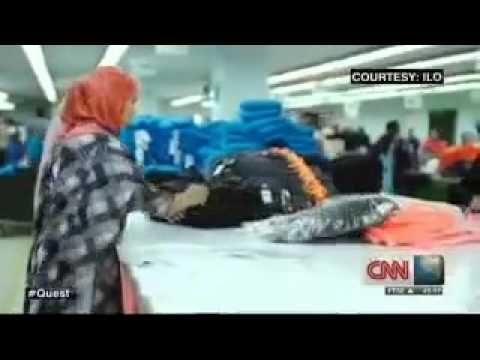
Workers' co-op leaders came together to discuss their present and future.

from the International Labour Organization

The economic contribution of cooperatives is often undervalued, if not completely ignored. But the reality is that the top 300 cooperatives worldwide have a turnover of more than US$ 1.9 trillion combined, which is more than the GDP of Italy.  Cooperatives have also played a key role in resolving the economic crisis that erupted in 2008. ILO research shows that cooperative enterprises across sectors and regions are proving to be relatively more resilient to the current market shocks than their capital-centred counterparts.

In Quebec, cooperatives are responding to the needs of the labour market by mobilizing both skilled and unskilled workers. In Asia, particularly in India, cooperatives are helping to organize workers in the informal economy. In Africa, trade unions and cooperatives are working together to promote freedom of association and the right to collective bargaining.

That does not mean that cooperatives are a panacea for workers and the economy as a whole. Depending on the country, cooperatives can face many challenges, one of them being how to attract young workers at a time when global youth unemployment is affecting more than 73 million young women and men, aged 15 to 24.

The ILO’s Bureau for Workers’ Activities and the ILO’s Cooperative Branch recently organized a seminar on the relationship between trade unions and worker cooperatives. Below are some of the participants’ opinions about the current challenges and opportunities for cooperatives in their countries and regions.


José Orbaiceita

President of Worker Co-op Federation of Argentina – FECOOTRA

“During the crisis of 2001, our Federation (FECOOTRA) supported workers who wanted to prevent their companies from going bankrupt, by providing them with legal and accounting advice. We helped them mobilize and supported the processes that led to the enactment of expropriation laws by parliament. There was a whole lot of support work going on. A good example is the case of the paper factory in my city, La Plata, which the workers recovered with the help of our federation. The workers bought the bankrupt factory after a few years, and today they are the owners of a company that continues to produce paper. There are hundreds of similar cases. The recovery process didn’t end with the crisis.

In Argentina and in the MERCOSUR trading area (composed of Argentina, Brazil, Paraguay, Uruguay and Venezuela) as a whole, worker cooperatives are thriving with the support of governments in the region. In that sense, we are not neutral. For us, it’s not the same thing to have a popular government supporting the cooperative movement or a right-wing government trying to destroy it. Today in Argentina, the cooperatives and mutual societies produce 10 percent of the national GDP, make up 30,000 companies and offer half a million jobs. Our goal is that in 20 years’ time, by 2030, we produce 30 percent of GDP, and that way achieve a more integrated, equitable and fair economy.”


Claude Dorion

Director General MCE Conseils-Quebec

“Globally, we have challenges in maintaining the balance between the associative nature of the ownership of the business and its operational efficiency.

Whatever sector we operate in, we will always attempt to bring together the technical expertise required within the cooperative and the resources to finance its development within market conditions.

Another challenge for us in Quebec is that the labour market is divided into two. On the one hand, we have skilled workers with high levels of education who have no difficulty finding jobs. This reduces the availability of skilled workers to create cooperatives, since the private labour market will give them reasonable working conditions. On the other hand, the unskilled workers are very favourable to the creation of cooperatives in order to secure their economic activities and employment opportunities. The challenge is to overcome this dichotomy within the labour market, to make sure that in each cooperative there are both unskilled workers for production operations but also skilled workers with management expertise."

Dr Vrajlal Sapovadia

Director of Shanti Business School-India

“In India, there are 600,000 cooperatives, having 250 million members… The Indian cooperatives boosted India’s economy and provided sustainability at the time of the 2008 crisis. There are around 20 million jobs in the economy which are either directly or indirectly created or supported by cooperatives. For example, in my city Ahmedabad, SEWA (Self-Employed Women’s Association), which has over 1.3 million members, is not just a trade union but also a movement of several types of membership-based organizations, including cooperatives.

SEWA has a strategy of “struggle and development” – the union struggles for workers’ rights while cooperatives and other collective organizations provide opportunities and development for workers. Among other services, it provides support to home-based workers – the majority of them women – in securing better piece rates (the pay given to a subcontracted worker for each item produced, such as home-rolled cigarettes, incense sticks, papadam or embroidery) for their work.”

Roberto Cardinale

International Relations Delegate for Generazioni Emilia-Romagna, branch of Lega cooperative-Italy

“In Europe, cooperatives should be more attractive nowadays, especially if they wish to fulfil the objective of the ‘cooperatives’ decade’, which is to get cooperatives to be the most chosen model of enterprises by 2020 and to attract young workers and entrepreneurs.

In Italy, the case of social cooperatives is well worth noting for other countries that are looking into different models of providing social services. Budget constraints at a national level create a gap between the need and the provision of social services, with the creation of a ‘black market’ filling this gap. For instance, take the case of elderly care. There is a substantive ‘black market’ in the Emilia-Romagna region where over 120,000 workers, mostly migrant domestic workers, are providing elderly care services for individual households. Addressing this need in a sustainable way is possible if cooperatives and trade unions join forces and establish cooperatives of care workers to provide this service.”

Stirling Smith

International programmes manager at the Cooperative College, Manchester

Co-author of How the SYNDICOOP approach has worked in East Africa

“Syndicoop was a useful model. It showed how the trade union and the cooperative movements can collaborate to organize workers in the informal economy. It was based on ILO norms, particularly ILO Recommendation 193, as well as the ILO Core Conventions Nos. 87 and 98 on Freedom of Association and Collective Bargaining. For example, the motorcycle-taxi drivers in Kigali, Rwanda, developed a unique kind of organization which is a hybrid between a trade union and a cooperative.

This model of organization is a way of bringing people together through solidarity and mutual assistance. It is the essence of trade unionism and cooperation and that’s what the Syndicoop approach tried to develop. More needs to be done. I think it is replicable in other contexts, but more needs to be done, especially at the national levels.”

ILO guidelines to promote cooperatives
ILO Recommendation 193 on the Promotion of Cooperatives (2002) provides guidance on cooperative policy and legislation, stressing the need for a level playing field for cooperatives and other enterprises. Over 70 countries have revised their cooperative legislation since the adoption of the Recommendation ten years ago, in line with its provisions.

All cooperative laws adopted since then have reduced state influence over, and state sponsoring of, cooperatives, increased cooperative autonomy and self-reliance, and cut links that might have existed between cooperatives and political organizations.

May 202013
 

International Labor Rights awards recognize those who work against sweatshops globally.

from International Labor Rights Forum

On Wednesday May 22, ILRF honours US Senator Tom Harkin for his leadership on international labor rights policies and two amazing coalitions of unions and labor rights organizations – one in Thailand and one in the US – for their groundbreaking work to organize workers across sectors and all along global supply chains. Here are the international unions to be honoured.

Video explains what the International Labor Rights Forum does.

YouTube Preview Image

Awardees

  • Senator Tom Harkin has long championed the rights of workers and children at home and around the globe, and made an indelible mark on human rights and social justice initiatives. Senator Harkin’s legacy includes legislative efforts to protect children from abusive working conditions around the world.
  • SERC – State Enterprises Workers’ Relations Federation: When Sawit Kaevwarn, the leader of Thailand’s largest union, met with migrant workers he decided to stand with them, building up strong solidarity between state employees and the struggling migrant workers, effectively incubating the Migrant Workers’ Rights Network.
  • The Burmese-led Migrant Workers Rights Network in Thailand: Kyaw Zaw and Hsein Htay came to Thailand as poor Burmese migrants looking for a better life. What they found was abuse and repression at every turn. Rather than backing down, they decided to work for change by forming the only member-based Burmese migrant workers’ rights group in Thailand. Over the last three years, the Migrant Workers Rights Network has courageously exposed labor rights violations at seafood processing facilities producing for the largest U.S. retailers, welcomed noble peace prize recipient Aung San Suu Kyi on her first overseas trip in 24 years to Mahachai, Samutsakorn Province in Thailand, and advocated for major reforms to Thailand’s immigration laws.
  • Warehouse Workers for Justice (WWJ) was founded to win justice for warehouse and logistics workers in Illinois. Founded by the United Electrical Workers (UE) as an independent workers' center, WWJ provides workshops so warehouse workers can educate themselves about workplace rights, unites warehouse workers to defend their rights on the job, builds community support for the struggles of warehouse workers and fights for policy changes to improve the lives of warehouse workers and members of their communities. 
  • The National Guestworker Alliance (NGA) was formed after Hurricane Katrina to organize thousands of guestworkers who were forced into labor camps across the Gulf Coast. Today, NGA fights for better working conditions, sensible migration policy, and new protections for all workers. Last year, NGA organized guest workers at a Louisiana crawfish processing plant supplying Walmart after workers reported being subjected to forced labor and threats of violence. With assistance from NGA, guest workers staged a strike at the facility that garnered widespread public support and eventually resulted in the U.S. Department of Labor issuing a citation to the processing plant for serious and willful violations of federal labor law and a fine for over $248,000 in back wages, fines, and penalties. 
  • The United Food and Commercial Workers (UFCW) has helped enable Walmart associates to form the group, Organization United for Respect at Walmart, or OUR Walmart for short.  After repeated push back by Walmart on efforts to form a union, members of OUR Walmart have pursued a creative advocacy campaign to address workplace grievances.  OUR Walmart now has over 4,000 members. To date, the organization has successfully lobbied Walmart to change its scheduling policy to create more predictable schedules for associates, helped address workplace grievances by individual workers, and led a historic nationwide strike on Black Friday, in which hundreds of Walmart workers walked off the job for the day. 

Source

May 162013
 

Republican challenges to Labor Board could harm workers like shop steward Marcus Hedger.

by David Moberg

The Senate Health, Education, Labor and Pensions committee hearing May 16 about appointments to the National Labor Relations Board may sound like an arcane, inside-the-Beltway event. But it will have very real effects both on major scale — determining the health of the nation’s economy and democracy — and a personal one, as in the case of Marcus Hedger.

In 2010, Hedger worked as a veteran printing pressman at Fort Dearborn Company, a large commercial printer in the Chicago suburbs. He also served his local union as shop steward and a member of the bargaining committee. When the union members voted down a contract that the company had tried to push through quickly, a Fort Dearborn vice-president said he was “sick of this union circus” and threatened to fire Hedger.
Continue reading »

May 142013
 
Hugh Segal

Senior Conservative Senator opposes Harperite Bill 377's onerous reporting requirements.

from Hansard

Hon Hugh Segal:
Honourable senators, I rise with the permission of Senator Ringuette, who has adjourned this motion, to speak on Bill C-377. I believe the bill must be amended and critically examined before committee. As I do believe that, I do not oppose second reading, although I cannot vote for the bill in principle and will not. Let me share my best judgment as to why Bill C-377, dealing with broadening trade union disclosure to CRA, is bad legislation, bad public policy and a diminution of both the order and the freedom that should exist in any democratic, pluralist and mixed-market society.

Continue reading »

May 142013
 

New Union constitutional highlights now out, regional tour makes its way across Canada.

from the New Union project

Local union leaders and activists from the Canadian Auto Workers (CAW) and the Communications, Energy and Paperworkers union (CEP) have been gathering in regional meetings to hear details of the plan to create a new union at a founding convention in Toronto this Labour Day weekend.

Continue reading »

May 132013
 

Report on developing countries shows majority of youth face serious job market challenges.

from the International Labor Organization

GENEVA (ILO News) – Two thirds of working age youth in some developing countries are either unemployed or trapped in low-quality jobs, according to the ILO Global Employment Trends for Youth 2013 report.

In six of the ten countries surveyed, over 60 percent of young people are either unemployed, working but in low quality, irregular, low wage jobs, often in the informal economy, or neither in the labour force nor in education or training. In Liberia, Malawi and Togo, the figure exceeds 70 per cent.

Continue reading »

May 062013
 

'Fix' fails to improve Canada's Foreign Temporary Workers program.

from the Union of Food and Commercial Workers

OTTAWA, April 29, 2013 — The union that represents thousands of temporary foreign workers is frustrated — but not surprised — at the glaring lack of substance in the federal government’s announcement today about “fixing” the shameful state of Canada’s temporary labour and immigration system.

Continue reading »

May 012013
 
FruitPickers

Weakened employment laws leave lower-wage workers struggling.

by David Fairey and Marjorie Griffin Cohen

BC has acquired the sad distinction of being home to Canada’s largest income gap, highest poverty rate, and second highest child poverty rate. It also has greater employment insecurity and lower wages than the national average, even though BC is the province with the highest cost of living in Canada.

How has this occurred in such a rich province?

The answer is at least partially due to the low-wage policies the BC government has implemented in the twenty-first century through changes to the Employment Standards Act (ESA). These changes, beginning in 2001, represented a dramatic roll-back of worker rights.

Continue reading »

Apr 222013
 

Let's break the silence of indifference and vigorously work to make workplaces safe.

from the Workers' Health and Safety Centre

More than twenty years ago, the Canadian Labour Congress declared April 28 a National Day of Mourning for workers who have been killed or suffer disease or injury as a result of work. Every year since, unions, labour councils, families and community partners gather by the thousands to "mourn for the dead." What began through the efforts of Canada's labour movement is now observed in more than 100 countries.

On April 28, honour those who have lost their lives or paid with their health. You can:

  • encourage others to attend a Day of Mourning event
  • draft a message for your organization's publication or website
  • work with local media to promote the Day's significance, write about worker monuments and cover Day of Mourning events
  • lobby politicians to recognize the Day through proclamation
  • invite faith communities and social justice groups to observe the Day
  • convince employers and public institutions to lower flags to half-mast.

The Day of Mourning, though, is also intended to focus attention on what we can do to break the silence of indifference and say "Enough!" to the suffering caused by hazardous working conditions. On April 28, let's resolve to take action that restores and promotes dignity and health in our workplaces and our communities. On this day and each that follows you can:

  • educate others about basic health and safety rights and prevention measures
  • help social justice and other groups educate at-risk members of our communities
  • negotiate greater decision-making power for worker representatives and joint committees
  • make health and safety a collective bargaining priority
  • encourage local media to report on health, safety and environmental issues
  • encourage MPs and/or MPPs to support ergonomic and violence regulations and stronger enforcement of existing legislation
  • create monuments to promote public awareness of workplace health and safety.

The Workers Health & Safety Centre (WHSC) mourns with you on April 28. But what began as Canada's Day of Mourning has also become an annual day to breathe new life into efforts aimed at securing safer and healthier workplaces.

For more information about April 28 or how the WHSC can help you pursue prevention through training and other information resources, contact a WHSC near you.

Reference
View our 2013 Day of Mourning brochure
Learn about the economic costs of inaction
Learn about the many worker memorial monuments in Ontario

Review a brief summary of workers rights translated to 17 different languages

Arabic German Portuguese Tamil
Chinese Gujarati Punjabi Urdu
English Italian Russian  
Farsi Korean Spanish  
French Polish Tagalog